

Jan 25, 2016 ● Kate Lopaze
How to Become a Speech Language Pathologist
Speech-language pathologists, also known as speech therapists, play a huge part in diagnosing, treating, and managing communication disorders (which include recovery from strokes, brain injuries, hearing loss, developmental disabilities, and autism).
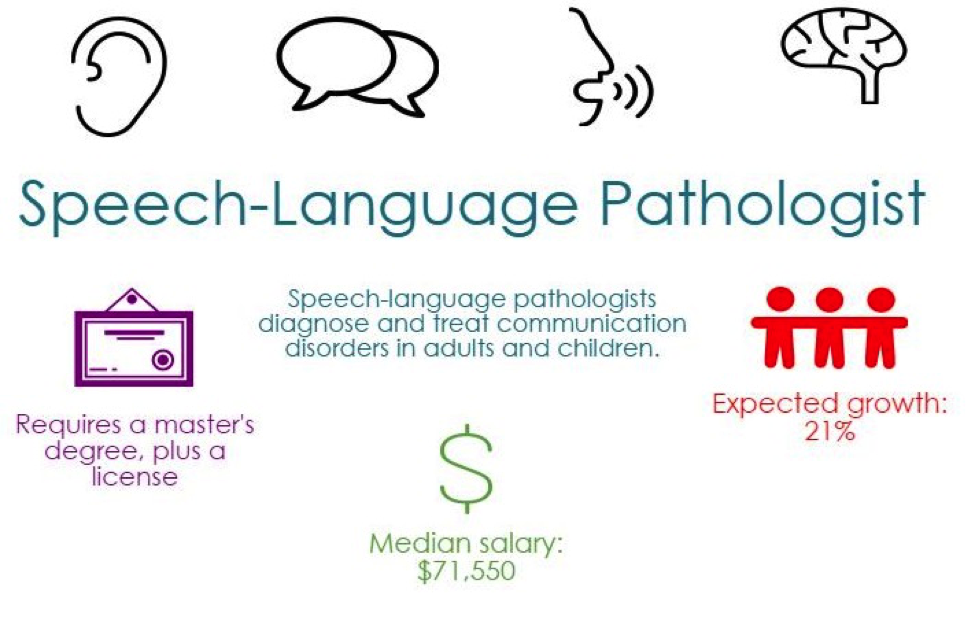
The speech-language pathologist career at a glance:
The Day-to-Day
Speech-language pathologists can be found in a variety of medical and educational settings: hospitals, elementary and secondary schools, colleges and universities, health clinics, and private practice offices. They typically work a 9-to-5-type schedule in an office, seeing patients on an appointment basis. Speech-language may specialize in treating communication disorders in particular age groups, from children (including autism spectrum communication issues and developmental delays) to adults (including stroke recovery and degenerative diseases like Parkinson’s). This position also often includes research and study of speech disorders and treatment in addition to working directly with patients.The Requirements
Speech-language pathologists typically have a master’s degree in the field, plus licensing and clinical training. Licensing requirements vary by state, so be sure to check on your own state’s regulations for speech therapists.The Skills
Speech-language pathologists require a number of special skills and knowledge bases, including:- Healthcare management and administration
- Human communication processes
- Problem solving
- Current medical technology and methods
- Patient care and communication
- Human behavioral patterns


